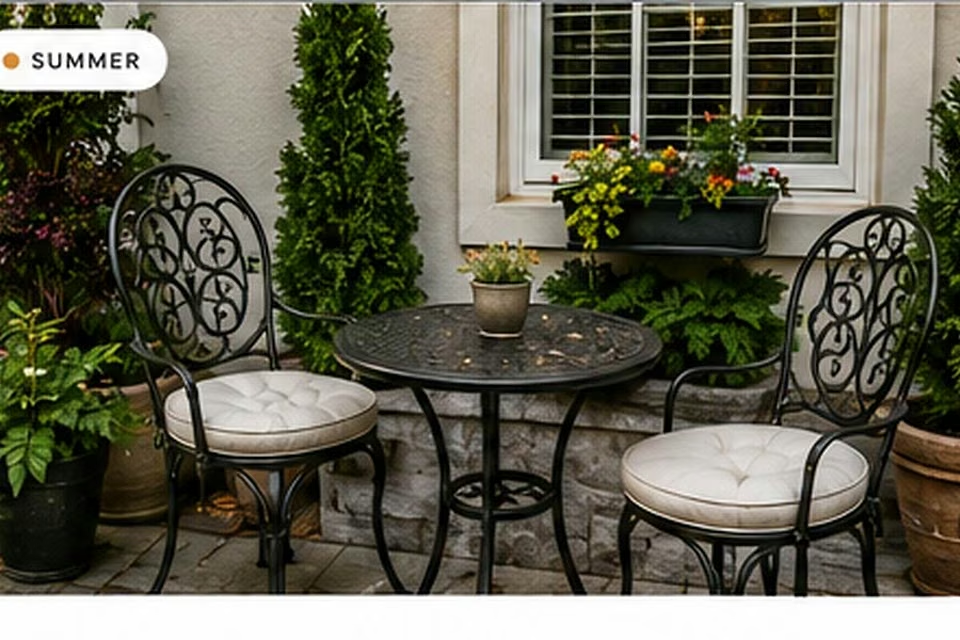
A small patio often has to serve as both a garden and a living room. The easiest way to make that work is to avoid filling the floor with plant pots. Use tables, shelves, railings where appropriate, and vertical structures to move some gardening activity upward while keeping clear space for people.
Protect the main seating footprint
Choose the seating arrangement first. Measure the chairs in their most commonly used position and keep the path to the door clear. Then place the garden elements around the edges. This reverses the common mistake of buying plants first and discovering that the patio no longer works as a room.
Recheck containers as weather changes, since a watering routine that works in mild conditions may be too little in heat or too much during cool, cloudy days. Remove dead foliage, keep drainage holes clear, and feed only according to plant needs and product directions. Refresh or replace mix when it breaks down or no longer drains well.
Use a narrow planting table
A narrow table can hold herbs and small flowers without occupying the full depth of the patio. Keep the working height comfortable, and place the table where it receives useful light. A shelf beneath the top can store watering tools and containers so the garden stays visually contained.
Use vertical space above the floor
A freestanding trellis or narrow shelf can add planting capacity without taking over the walking zone. Keep the structure stable and inspect it after strong weather. Vertical plants can also help define the edge of the patio without creating a solid wall.
Make every container easy to reach
In small spaces, accessibility matters more than density. If a plant is buried behind a chair or another pot, it will be watered less often and harvested less often. Leave enough finger and hand clearance to inspect the soil and remove a leaf when needed.
Keep the garden visually quiet
Use a consistent group of containers or one material family so the garden feels like part of the patio instead of a collection of unrelated objects. Repeating the same planter shape can create a cleaner composition even when the plants are different.
Practical checkpoint
Temporarily move every plant to one side of the patio and rebuild the seating. If the patio works better, use that layout to place the garden around the perimeter rather than through the center.
Plan for seasonal movement
Some containers will need to move because of heat, frost, or changing light. Keep the system modular. A plant you cannot safely move is not truly flexible, even if it began in a compact container.
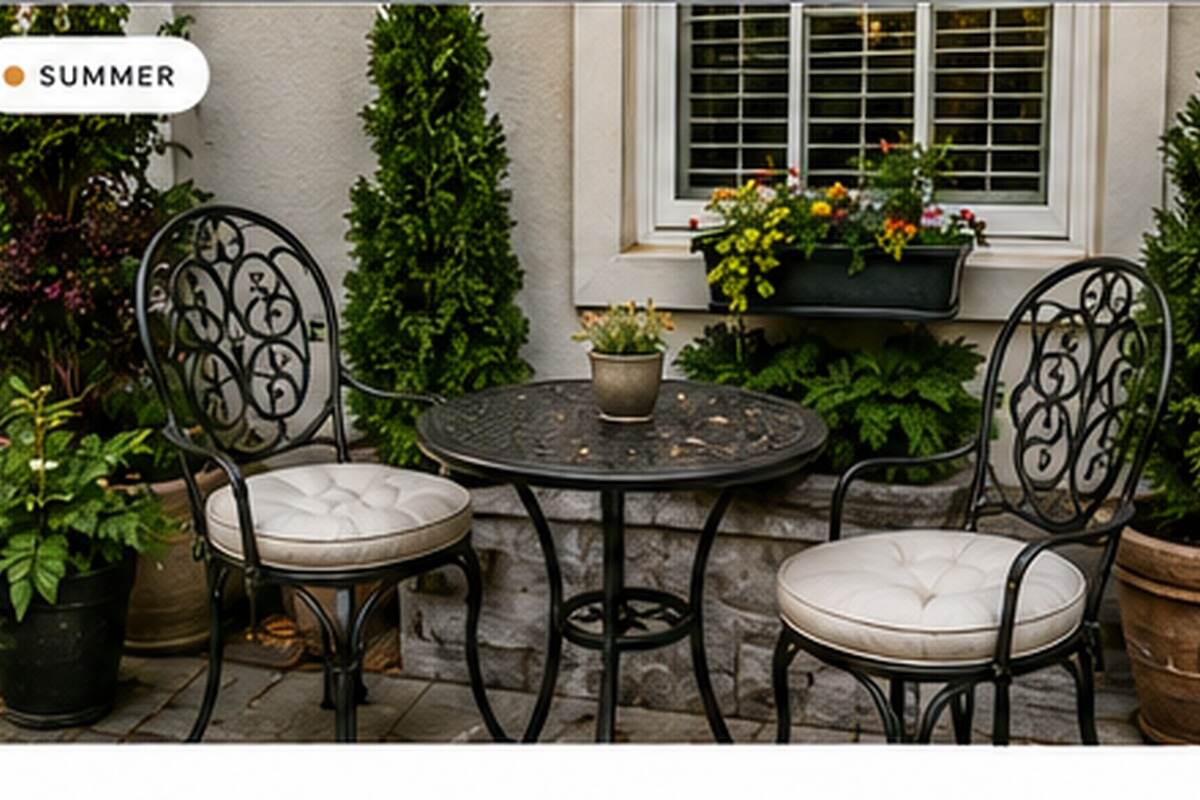
Solve more than one problem with each decision
How to Combine a Tabletop Garden With a Small Patio Without Losing Seating becomes more useful when one improvement handles more than one need. Start with Protect the main seating footprint and ask whether it helps with storage, circulation, seating, light, or visual calm. Then test it against Use a narrow planting table.
Use scale and sightlines as guardrails
In a compact room, proportion is part of the design. The guidance under Use a narrow planting table can be treated as a sightline test as well as a style choice.
Leave one layer flexible
Keep some pieces movable or easy to replace as the room changes. Use Use vertical space above the floor to decide what should stay fixed and what can remain adaptable.
Keep a Tabletop Garden Useful, Not Fragile
A tabletop garden works best when it can survive the ordinary use of the table underneath it. Leave enough clear surface for plates, drinks, tools, or a small meal, and keep containers low enough that conversation and sight lines are not interrupted. Choose pots with stable bases and place saucers where water cannot stain the tabletop or run toward electrical equipment. Group plants by similar light and watering needs so one container does not require attention several times a day while its neighbors prefer to dry out. The small scale also makes seasonal changes easy: swap one tired plant, move a pot into better light, or replace a decorative accent without rebuilding the whole arrangement. Treat the tabletop as a working surface first and the garden as a flexible layer on top of it. That balance keeps the combo practical long after the first planting day.
Frequently asked questions
How do I garden on a small patio?
Prioritize vertical and tabletop growing, then protect a clear seating and circulation area. The floor should not become the only place for plants.
Can a patio have both a dining table and a garden?
Yes. Use edge planting, narrow shelves, and containers that can move when the table is in use.
What is the biggest small-patio mistake?
Filling the walking and seating zone with fixed pots. Start with circulation and then add plants around it.
For leave one layer flexible, check the growing conditions before making a change. Light, moisture, root space, soil structure, and mature size interact, so adjust the factor most likely to be limiting the plant or bed first. Use labels or local extension guidance for region-specific details and avoid extra fertilizer or frequent watering without a clear reason.
Let the site and the plant’s needs guide a Tabletop Garden Useful, Not Fragile. Observe how the area behaves after watering and rain, leave room for mature growth, and keep access for weeding and inspection. If the same problem returns, reassess drainage, light, or soil conditions before repeating the same treatment.
For frequently asked questions, check the growing conditions before making a change. Light, moisture, root space, soil structure, and mature size interact, so adjust the factor most likely to be limiting the plant or bed first. Use labels or local extension guidance for region-specific details and avoid extra fertilizer or frequent watering without a clear reason.
Use a quick routine to inspect moisture, drainage, plant growth, and pot stability. Rotate containers when growth leans toward light, but avoid moving stressed plants repeatedly between very different exposures. Before cold weather, protect containers and root systems according to the plant’s hardiness and local climate.
For a narrow planting table, check the growing conditions before making a change. Light, moisture, root space, soil structure, and mature size interact, so adjust the factor most likely to be limiting the plant or bed first. Use labels or local extension guidance for region-specific details and avoid extra fertilizer or frequent watering without a clear reason.