
A careful fall division can rejuvenate crowded spring- and summer-blooming perennials and give you more healthy plants without turning the job into a guess.
Know when division makes sense
Division is useful when a perennial has become crowded, the center of the clump is thinning, blooms are smaller than they used to be, or the plant is simply occupying more space than the design can support. It is not an automatic fall chore. A healthy plant that is performing well and fits the bed can often stay where it is.
Timing matters because a divided plant loses part of its established root system. University of Minnesota Extension notes that spring is best for many plants, while spring- and summer-blooming perennials can often be divided in fall when there is enough time—roughly four to six weeks in colder areas—for roots to establish before the ground freezes.
Water and prepare before you dig
Water the planting area the day before if the soil is dry. Moist soil is easier to dig and reduces the chance that roots will tear apart from hard, powdery ground. Choose a cloudy day when possible so freshly lifted divisions are not immediately stressed by bright heat.
Gather a sharp spade or garden fork, a clean knife if the plant requires cutting, containers or a tarp for temporary holding, and labels. If you are dividing several varieties, label each group before moving on. That tiny step prevents a surprisingly common fall gardening mistake: creating a mystery bed of unnamed divisions.
Lift the clump without shredding the root system
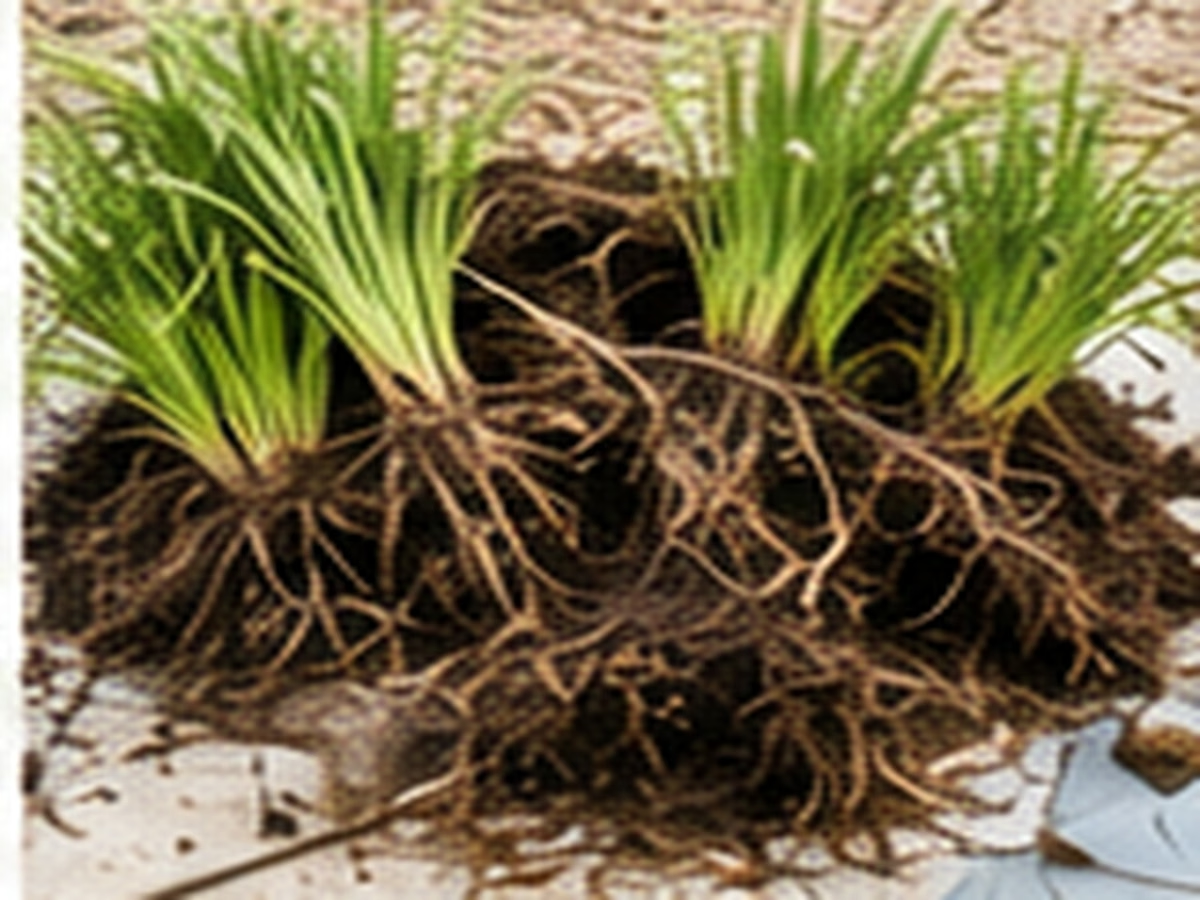
Start several inches outside the visible crown and dig around the plant to loosen the root ball. Lift from underneath rather than pulling on the stems. Once the clump is out, remove loose soil only to the point that you can see how the crown and roots are connected.
The right cutting point depends on the plant. Some perennials separate easily by hand; denser crowns may require two forks, a spade, or a sharp knife. Work deliberately. A fast, rough split can produce divisions with too few shoots or damaged roots that struggle after replanting.
Make divisions that can actually recover
A useful division has a healthy crown, several strong shoots, and enough roots to support the top growth. Avoid making tiny pieces simply to create more plants. Fewer robust divisions generally establish faster than a pile of undersized fragments.
Inspect the center of the old clump. If it is woody, weak, or mostly dead, remove the poor material instead of forcing it into a new planting hole. For plants with deep or difficult roots, such as some baptisia, division may be inappropriate. Species behavior matters more than a one-size-fits-all technique.
Replant at the same basic depth
Prepare the new site before the divisions are sitting in the sun. Replant at the depth the plant was growing originally unless the species has a specific requirement. Firm the soil around the roots, water thoroughly, and check again after the water drains away to make sure the crown is not buried too deeply.
Give divisions enough room to mature. The goal is not to create an instantly full bed; it is to create a planting that can fill in naturally without being overcrowded next year. Use the mature size on the plant tag or a reliable reference, not the small size of the division you are holding today.
Protect new divisions through the transition
Keep new divisions evenly moist while they establish, but do not keep the soil constantly saturated. A light layer of mulch can help moderate temperature and moisture. Avoid piling mulch directly on crowns, and keep paths and mowing edges clear so the newly planted areas are not disturbed.
Mark the location if the plants disappear after frost. In spring, you will know exactly where divisions were planted and can adjust spacing or replace weak pieces. If a division fails, resist replacing it immediately until you understand whether the issue was species suitability, timing, moisture, depth, or transplant shock.
Practical checkpoint
A good fall division is not the largest possible number of pieces. It is the smallest number of healthy, well-rooted divisions that have enough time and space to establish before winter.
Work from the actual conditions
Frequently asked questions
Can I divide every perennial in fall?
No. Some plants respond better to spring division, and others have roots or crowns that are difficult to divide. Check guidance for the specific perennial before digging.
How many pieces should I make?
Make as many strong divisions as the plant can support while keeping adequate roots and shoots on each piece. Avoid creating tiny pieces simply to increase the count.
How long should fall divisions have to establish?
In colder regions, several weeks of root establishment before the ground freezes can be important. Local weather and the plant species determine the workable window.
Sources and further reading
For work from the actual conditions, check the growing conditions before making a change. Light, moisture, root space, soil structure, and mature size interact, so adjust the factor most likely to be limiting the plant or bed first. Use labels or local extension guidance for region-specific details and avoid extra fertilizer or frequent watering without a clear reason.
Let the site and the plant’s needs guide frequently asked questions. Observe how the area behaves after watering and rain, leave room for mature growth, and keep access for weeding and inspection. If the same problem returns, reassess drainage, light, or soil conditions before repeating the same treatment.
For sources and further reading, check the growing conditions before making a change. Light, moisture, root space, soil structure, and mature size interact, so adjust the factor most likely to be limiting the plant or bed first. Use labels or local extension guidance for region-specific details and avoid extra fertilizer or frequent watering without a clear reason.
Let the site and the plant’s needs guide when division makes sense. Observe how the area behaves after watering and rain, leave room for mature growth, and keep access for weeding and inspection. If the same problem returns, reassess drainage, light, or soil conditions before repeating the same treatment.