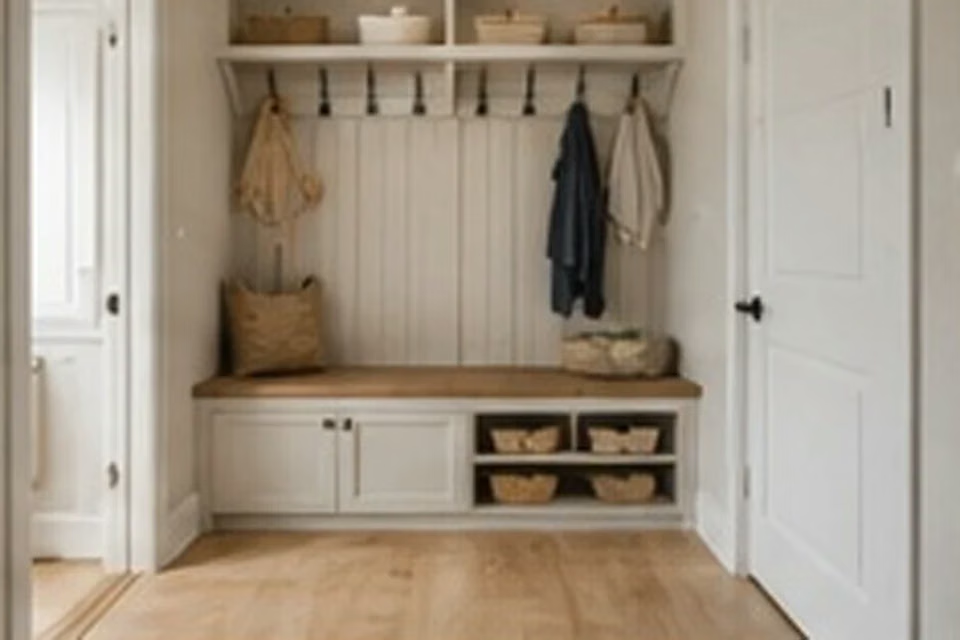
Create a compact entryway drop zone that gives keys, shoes, mail, and bags a predictable home without crowding the doorway.
Reserve the first reach for everyday items
The most frequently used items should live where you can reach them without bending or opening a second door. A shallow shelf or drawer near the entry can handle keys, sunglasses, and dog leashes, while less-used items can move higher or deeper into the cabinet.
Give mail one temporary home
Mail becomes clutter when every household member has a different place to set it down. Use one clearly labeled tray or narrow drawer as the incoming zone, then schedule a simple weekly sort for action, recycling, and filing.

Contain the small loose items
Baskets and small bins work better than wide open shelves for gloves, hats, and reusable bags. Choose containers that can be pulled out with one hand so the system remains easy to use when you are leaving in a hurry.
Protect the walkway
The storage system should make the entry feel clearer, not tighter. Keep cabinet doors from swinging into a walking path, and leave enough clearance for people to enter with groceries or a coat. Measure the doorway and circulation area before buying furniture.
A simple final check
A successful drop zone is boring in the best way: everyone knows where things go and can put them away without thinking.
Design around the busiest five minutes of the day
Storage systems succeed when they work during arrival, departure, meal prep, or laundry rushes—not only when everything is tidy. Put the most frequently handled items at the easiest reach and move occasional supplies into less convenient zones.
Measure before buying organizers
Bins and drawer inserts should fit the actual opening with enough tolerance to slide in and out. Measure width, depth, height, hinges, and nearby door swings. A collection of organizers that almost fits often creates more clutter than it removes.
Leave room for refilling and cleaning
Every container needs a little working space around it. Overfilled bins become difficult to empty, wipe, and sort. A useful system has a clear reset point and a visible limit that tells the household when to edit rather than expand storage.
Label only where labels improve the system
Labels are helpful when more than one person uses the storage or when similar items are easy to confuse. They are less useful for obvious categories that everyone already understands. Keep the visual treatment simple so the storage still feels like part of the room.
Review the system after two weeks
Live with the arrangement before adding accessories. Notice what people ignore, where items still pile up, and which container is never opened. Those observations are better design data than guessing from a showroom setup.
More from DreamHomeGarden: read this related guide
Practical notes for living with the result
Draw the circulation path
For a drop-zone cabinet setup for small entryways, the most useful test is what happens during an ordinary week.
Test the furniture footprint
For a drop-zone cabinet setup for small entryways, the most useful test is what happens during an ordinary week.
Connect the zones visually
For a drop-zone cabinet setup for small entryways, the most useful test is what happens during an ordinary week.
Live with the arrangement before adding more
For a drop-zone cabinet setup for small entryways, the most useful test is what happens during an ordinary week.
A quick implementation plan
Practical checkpoint
For A Drop-Zone Cabinet Setup for Small Entryways, the useful checkpoint is to make sure the main idea works under ordinary conditions, not just in the ideal setup. Pay particular attention to give mail one temporary home, then confirm that the result remains easy to use and maintain.
Frequently asked questions
Keep reading
Practical details for A Drop-Zone Cabinet Setup for Small Entryways
Create a compact entryway drop zone that gives keys, shoes, mail, and bags a predictable home without crowding the doorway.
Keep practical details for A Drop-Zone Cabinet Setup for Small Entryways connected to comfort and daily movement. Measure from finished surfaces, allow room for doors and chairs to move, and choose finishes that are practical to clean. Leave some flexible capacity so the room can adapt rather than filling each corner with another item.
Reserve the first reach for everyday items
In the context of A Drop-Zone Cabinet Setup for Small Entryways, the safety check detail should be reviewed alongside the space, materials, and routine already described. In the context of Reserve the first reach for everyday items, check layout, access, materials, upkeep, and everyday use before choosing the final arrangement.
For a drop-zone cabinet setup for small entryways, keep the next action small enough to verify. Measure or inspect the part affected by “reserve the first reach for everyday items”, make the change, and then look again at the surrounding home or garden project.
Give mail one temporary home
For mail one temporary home, start with actual measurements and the routine the room needs to support. Confirm that doors, drawers, windows, outlets, and walking paths remain usable, then choose pieces that fit the clear space rather than the full wall measurement. Test the arrangement before buying accessories.
For a drop-zone cabinet setup for small entryways, keep the next action small enough to verify. Measure or inspect the part affected by “give mail one temporary home”, make the change, and then look again at the surrounding home or garden project.
Contain the small loose items
For contain the small loose items, start with actual measurements and the routine the room needs to support. Confirm that doors, drawers, windows, outlets, and walking paths remain usable, then choose pieces that fit the clear space rather than the full wall measurement. Test the arrangement before buying accessories.
For a drop-zone cabinet setup for small entryways, keep the next action small enough to verify. Measure or inspect the part affected by “contain the small loose items”, make the change, and then look again at the surrounding home or garden project.
Protect the walkway
Keep the room workable by building maintenance into the routine: return daily items to their assigned zones, wipe high-touch surfaces with suitable products, and revisit storage when seasonal belongings change. Avoid filling every shelf immediately; some empty capacity makes it easier to reset the room after a busy week and keeps cleaning access open.
For a drop-zone cabinet setup for small entryways, keep the next action small enough to verify. Measure or inspect the part affected by “protect the walkway”, make the change, and then look again at the surrounding home or garden project.
A simple final check
For A Drop-Zone Cabinet Setup for Small Entryways, use tool storage as the next check and compare it with the existing conditions described above. For A Drop-Zone Cabinet Setup for Small Entryways, review layout against the actual conditions of this interior design & decor project before choosing the final arrangement.
Keep a simple final check connected to comfort and daily movement. Measure from finished surfaces, allow room for doors and chairs to move, and choose finishes that are practical to clean. Leave some flexible capacity so the room can adapt rather than filling each corner with another item.
A quick final review
Test the room at the times it will actually be used. Open drawers and doors fully, walk through with a laundry basket or serving tray if relevant, and check whether light switches, outlets, and vents remain accessible. A layout that looks good from the doorway is not finished until routine movement feels comfortable and storage can be reached without moving other items.
- Confirm that the change still serves the original purpose of a drop-zone cabinet setup for small entryways.
- For this Dream Home & Garden project, "A Drop-Zone Cabinet Setup for Small Entryways" works best when the choice is checked against access, upkeep, and everyday use.
- For "A Drop-Zone Cabinet Setup for Small Entryways", compare this point with the current interior design & decor setup before deciding what to change.
- The useful next step for "A Drop-Zone Cabinet Setup for Small Entryways" is to verify the existing condition before adding another material, feature, or maintenance task.