
Build a warmer living room for fall with layered textures, grounded colors, and useful changes that make the space feel collected rather than themed.

Start with warmth at the largest pieces
Current fall design reporting points toward warmer palettes, layered finishes, natural materials, and rooms that feel more personal and lived-in. You do not need to repaint every wall to get that feeling. Start with the visual temperature of the room: the sofa, rug, curtains, wood tones, and the color of the largest soft furnishings all matter more than a handful of seasonal decorations.
Look at your room from the doorway. If it feels pale or visually disconnected, identify one large source of coolness and one place where texture is missing. Solving those two issues often produces more warmth than adding a dozen small accessories.
Layer texture before adding more color
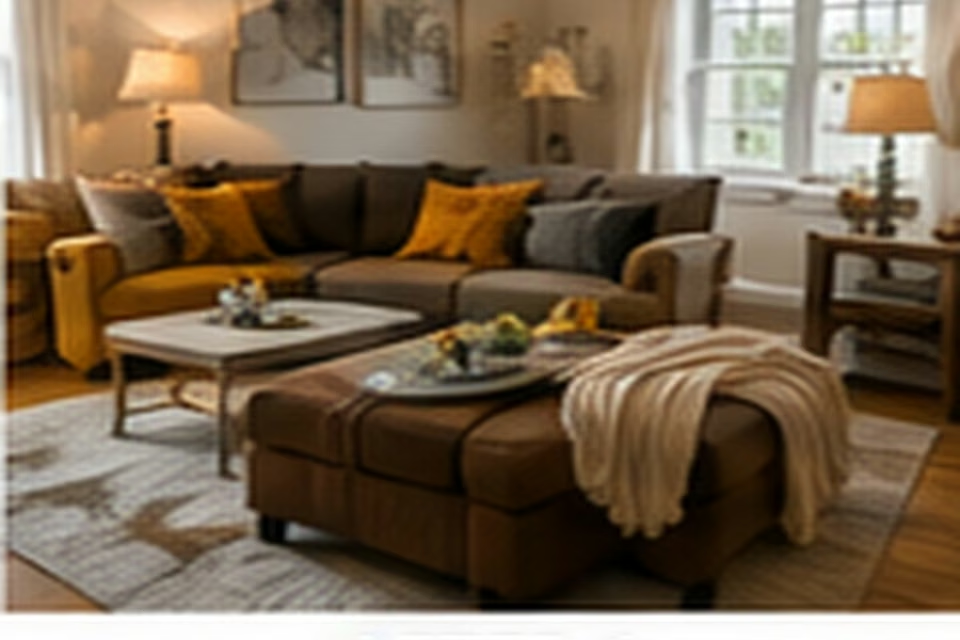
Texture is the easiest way to make a neutral living room feel cozy without making it busy. Combine a woven basket, a wool-like throw, linen or cotton upholstery, a wood table, and a soft rug. The surfaces should feel different when you imagine touching them.
Use contrast deliberately. Smooth upholstery next to a nubby throw, or a hard wood table beside a soft rug, makes the room more dimensional. You do not need every material to be different; repeating one or two textures creates the sense that the room was assembled over time.
Use fall colors as supporting players
Deep brown, olive, muted plum, terracotta, and warm cream are all useful directions for fall, but the room does not need to look seasonal in a literal way. Choose one deeper color for a chair, pillow, art piece, or throw and let the rest of the palette stay grounded.
Avoid buying a complete matching set in one seasonal color. A few notes of color distributed across the room look more natural and can stay useful after the leaves are gone. The most durable seasonal refreshes are pieces you would still keep if someone removed the word “fall” from the plan.
Make lighting part of the styling plan
A living room can feel cold even with warm furniture if the lighting is flat. Use more than one light source: a floor lamp for reading, a table lamp for a side table, and softer accent light near the focal area. The goal is not maximum brightness; it is a comfortable range of light.
Check the room at dusk, not just during the day. A space that looks perfect in afternoon sunlight may feel stark after dark. Small lamp changes, warmer bulbs, and better placement can have a larger effect than another decorative object.
Add personality without clutter
Houzz reporting also highlights more personal, collected-over-time rooms rather than off-the-shelf perfection. Bring in one vintage or handmade-looking piece, a family object, a book stack you actually use, or art that has meaning. These details make a living room feel inhabited instead of staged.
Edit aggressively. If every surface has an accessory, none of the objects has enough breathing room to matter. Keep surfaces functional and leave negative space around the pieces you want people to notice. A cozy room should feel inviting, not crowded.
Finish with one practical comfort upgrade
Choose one change that affects daily use: a better reading lamp, a softer throw at the sofa, a storage basket beside the chair, or a small ottoman that makes the seating arrangement work harder. Comfort is part of the visual result because the room looks better when people actually use it.
Stand back again after the changes. The room should feel warmer without needing an explanation. That is a good sign that the update is built on proportion, texture, light, and personality rather than seasonal clutter.
Practical checkpoint
The strongest fall living room update is one you would still like in January. Keep seasonal color and decoration flexible, then invest your effort in light, texture, comfort, and pieces that fit the room year-round.
Work from the actual conditions
Layer warmth without turning the room seasonal-only
A fall living room works best when the underlying furniture plan remains useful after the decorations come down. Start with the seating, walking paths, lighting, and the surfaces people actually use. Then add a smaller number of seasonal layers through throws, pillows, natural textures, art, or a restrained color accent.
Use the same rule for every addition: it should either improve comfort, add texture, create a useful focal point, or reinforce a color already present. This prevents the room from collecting unrelated autumn objects. Keep everyday controls, outlets, remote storage, and frequently used tables accessible.
Make the change reversible
Fall styling is a good place for temporary tests. Move one textile or accessory before buying another, and live with the change for several days. Check the room in morning daylight, evening lamplight, and from the doorway. A warm palette can feel different at each time, so the final mix should work beyond a single photo moment.
Frequently asked questions
How can I make a living room feel cozy without changing furniture?
Layer textiles, adjust lighting, add natural materials, and create a more grounded color balance. These changes can shift the room without replacing large pieces.
Are brown and olive good fall colors for a modern room?
Yes. Used selectively, earthy browns, olive, warm cream, terracotta, and muted plum can add depth while keeping the room flexible beyond fall.
How much fall decor is too much?
Use enough to establish a mood, not enough to compete with the room. A few repeated seasonal cues usually work better than filling every surface.
Sources and further reading
For the change reversible, start with actual measurements and the routine the room needs to support. Confirm that doors, drawers, windows, outlets, and walking paths remain usable, then choose pieces that fit the clear space rather than the full wall measurement. Test the arrangement before buying accessories.
Keep frequently asked questions connected to comfort and daily movement. Measure from finished surfaces, allow room for doors and chairs to move, and choose finishes that are practical to clean. Leave some flexible capacity so the room can adapt rather than filling each corner with another item.