
Feeling like every backyard barbecue or quiet morning coffee is visible to the neighbors is one of the more common reasons people stop using an otherwise nice backyard. The fix doesn't have to mean a solid eight-foot wall around the entire property; a mix of fencing, landscaping, and screening, matched to the specific sightline that's actually bothering you, usually solves the problem with less cost and a better-looking yard than a single blunt barrier.
Figure out exactly what needs blocking before choosing a solution
The most effective privacy projects start with identifying the specific problem sightline rather than assuming the whole yard needs enclosing. Stand in the spot where privacy matters most, like a patio dining table or a hot tub, and actually look around at eye level and from a seated position, since what's visible from a second-story neighboring window is often a completely different fix than what's visible from ground level over a fence.
Practical checkpoint
Before moving on, make sure Figure out exactly what needs blocking before choosing a solution is working for the space described in this guide.
Fencing: still the most direct fix for ground-level sightlines
A traditional privacy fence, typically six to eight feet depending on local code, remains the most reliable way to block a ground-level view completely. Vertical board fences with minimal gaps offer full privacy; horizontal-slat designs, increasingly popular for a more modern look, can be built with narrow enough gaps to block sightlines while still allowing some airflow. Check local height restrictions and any HOA rules before finalizing a design, since many municipalities cap residential fence height at six feet without a variance.
- Solid board fence: maximum privacy, blocks airflow and light along with the view.
- Horizontal slat fence: modern look, can be built with tight enough spacing for near-total privacy.
- Lattice topper on an existing fence: adds height and some privacy without a full rebuild, especially when paired with a climbing vine.
Landscaping: slower, but often more effective long-term
Living screens, whether a hedge, a row of columnar evergreens, or a mixed planting of large shrubs, take longer to establish than a fence but often end up more effective and more pleasant to look at once mature, since they soften a property line rather than walling it off. Evergreen options provide year-round privacy; a mix of evergreen and flowering shrubs adds seasonal interest while still blocking the view for most of the year. Planting distance matters: space according to the mature width of the species, not how sparse the young plants look at installation, since overcrowded plantings struggle and thin out over time.
Combining a partial fence with plantings often beats either alone
A common and effective approach uses a moderate-height fence, four to five feet, for the ground-level barrier and immediate structure, then layers taller plantings behind or beside it to extend the effective privacy height without needing a taller, more expensive, and often code-restricted fence. This combination also reads as more intentional landscaping than a tall solid wall on its own.
The most effective backyard privacy usually isn't the tallest single barrier available, it's whatever combination actually blocks the specific view that bothers you without walling off light, airflow, and the sense of being outside.
Fast, lower-cost privacy while plants establish
Since living screens take one to several years to mature, several temporary or lower-cost options bridge the gap: tall potted plants or bamboo screening panels placed strategically, outdoor curtains hung from a pergola or existing structure, or a portable privacy screen or trellis panel. These are also useful as a permanent, renter-friendly solution for anyone who can't install a fence or plant directly into the ground.
Overhead privacy, for second-story sightlines
A ground-level fence or hedge does nothing for a view from a neighboring second-story window, which needs an overhead solution instead: a pergola with a semi-solid roof or retractable canopy, a large shade sail, or strategically placed tall trees positioned to block the specific sightline from above rather than around the yard's perimeter.
Check before you plant or build
Call your local building or planning department before installing a fence over typical height limits, and check for buried utility lines before digging post holes; most areas offer a free utility marking service before any digging project.
Privacy needs often differ by season
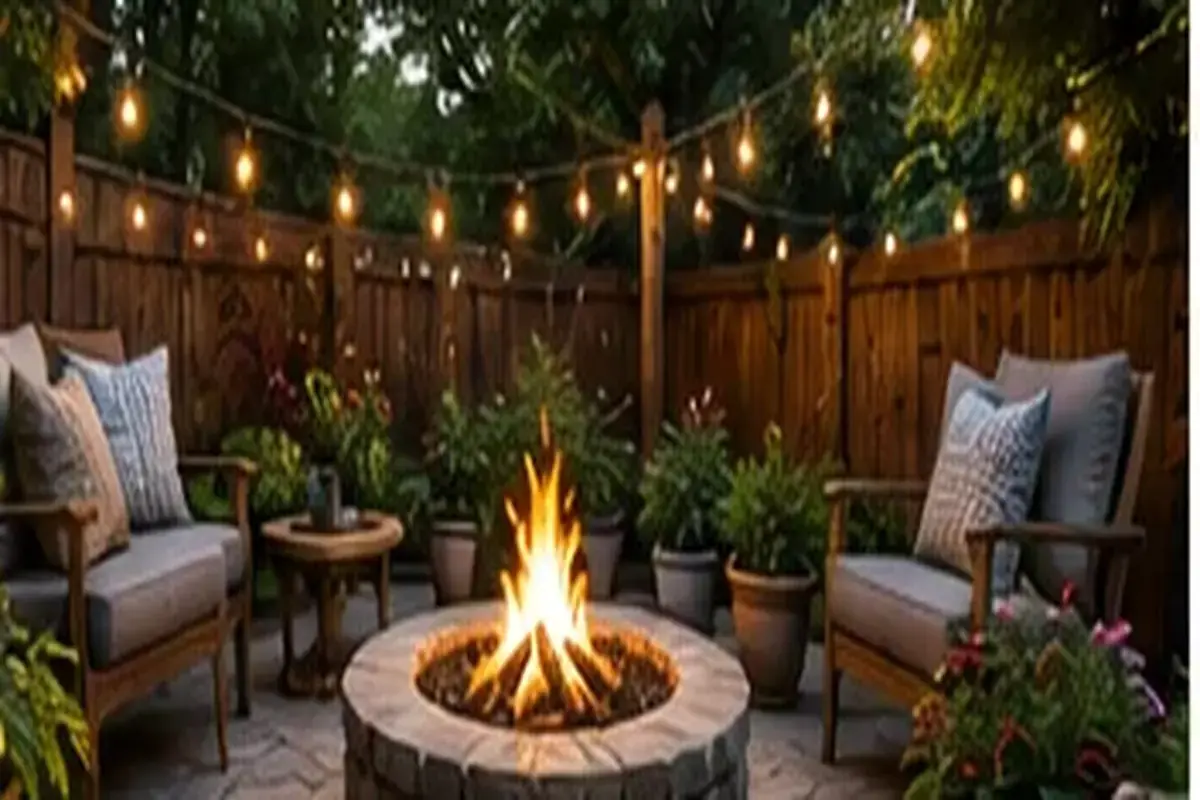
A yard that feels adequately private in summer, when deciduous trees and shrubs are fully leafed out, can suddenly feel exposed in winter once the leaves drop, which is worth factoring into any plant-based privacy plan. Mixing evergreen species into the planting, rather than relying entirely on deciduous trees or shrubs, keeps the screening effect consistent through the colder months when a bare yard otherwise loses its cover right as neighbors are more likely to be looking out at snow or a quiet winter garden.
Rough cost expectations
A basic wood privacy fence typically costs noticeably less per linear foot than a vinyl or composite equivalent, though it requires more upkeep over time, including periodic staining or sealing. Living screens cost far less upfront for young plants but require patience, typically one to three years, to reach full screening height, while mature, larger specimen plants installed for instant privacy cost significantly more per plant. Getting quotes from a local fencing contractor and a landscaper for the same project is a reasonable way to compare the real tradeoff between upfront cost and long-term maintenance for your specific yard.
Plan the route as carefully as the destination
Backyard Privacy Ideas works best when the path into the space is obvious and comfortable. Use Figure out exactly what needs blocking before choosing a solution to establish the main purpose, then connect it to Fencing: still the most direct fix for ground-level sightlines so seating, circulation, and activity zones support one another.
Frequently asked questions
What's the fastest way to add backyard privacy without a full fence project?
Tall potted plants, a freestanding trellis or screen panel, and outdoor curtains on an existing structure like a pergola or covered patio all add meaningful privacy within a day, without the cost or permitting considerations of a new fence.
How tall can a backyard fence be without a permit?
This varies significantly by city and county, but six feet is a common cap for residential backyard fences without a variance; always confirm with the local building department, since some areas allow more height set back from the property line or in specific zones.
What plants work best for a fast-growing privacy screen?
Fast-growing evergreens like arborvitae or Leyland cypress are popular for quick screening in many climates, though the best choice depends heavily on your specific region and hardiness zone; a local nursery or extension office can recommend species suited to your exact conditions.