
Plan front-door lighting so visitors can see steps, hardware, and the approach clearly without creating harsh glare.
Light the arrival path first
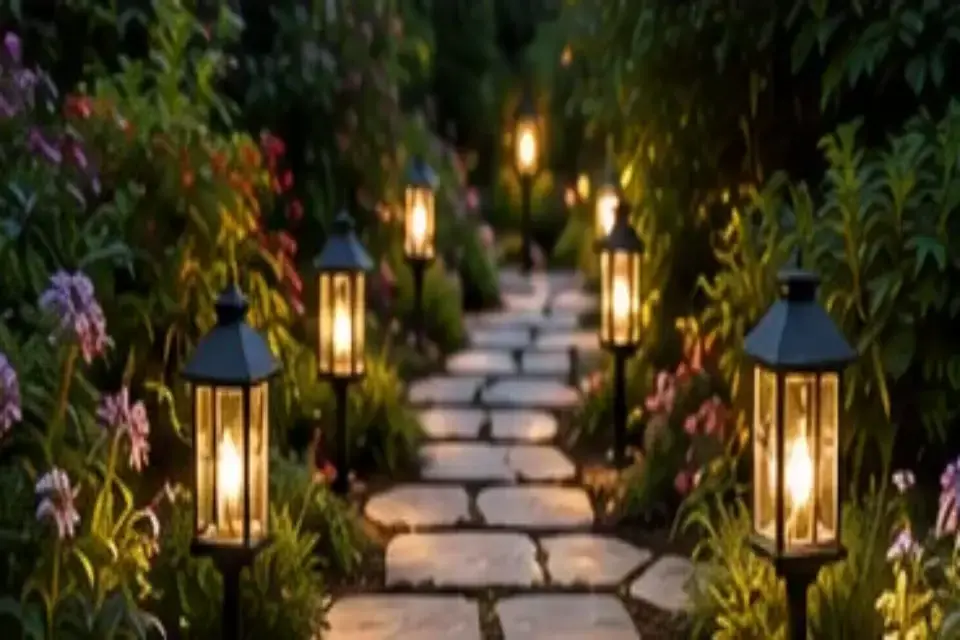
The route from the driveway or walkway to the door should be readable after dark. Use path lighting or a fixture near the approach so the entry does not appear as a bright door floating inside a dark yard.
Place wall lights for faces and hardware
Fixtures mounted around the door should illuminate the threshold, handle, and doorbell area. A balanced pair can work well on wider entries; a single fixture can be appropriate when the architecture gives it one clear location.
Avoid shining light toward the street
A good fixture points light where people need it rather than directly into neighbors' windows or drivers' eyes. Shields and downward-focused designs can keep the entry comfortable while still providing useful illumination.
Match the fixture to the house
Scale matters. A tiny fixture can look lost on a tall facade, while an oversized lantern can dominate a small porch. Choose a finish that complements existing hardware so the entry looks intentional.
A simple final check
Test a new fixture after sunset before finalizing the position; glare is much easier to spot at night than on a bright afternoon.
Work from the public view inward
Start by looking at the house from the street, sidewalk, and driveway. Note the elements that dominate first: the entry door, porch, driveway edge, large utility equipment, or an empty planting bed. Solve the strongest visual issue before adding small decorations.
Respect mature scale
Landscape screening and curb-appeal improvements should be planned around mature plant size and the true circulation path. A young shrub may look perfect at the nursery and become an obstruction later. Leave service, sightline, and parking clearance from the beginning.
Repeat materials and shapes
A front yard feels more finished when two or three materials recur. Repeat a stone tone, metal finish, or plant shape from the entry to the driveway edge rather than adding a different material for every detail.
Check the view at night
Lighting, shadows, and glare can change the appearance of a front yard after sunset. Walk the approach at night and look from the street before finalizing fixtures or bright accents. Good curb appeal should still feel comfortable when the natural light is gone.
Favor improvements that stay easy to maintain
A polished entry that needs constant trimming or daily sweeping will lose its appeal. Choose edging, plants, and fixtures that fit the time you realistically have for maintenance. A simpler landscape kept in good condition usually looks better than a complicated one that is neglected.
More from DreamHomeGarden: read this related guide
Practical notes for living with the result
Draw the circulation path
For front door lighting placement for a better nighttime entry, the most useful test is what happens during an ordinary week.
Test the furniture footprint
For front door lighting placement for a better nighttime entry, the most useful test is what happens during an ordinary week.
Connect the zones visually
For front door lighting placement for a better nighttime entry, the most useful test is what happens during an ordinary week.
Live with the arrangement before adding more
For front door lighting placement for a better nighttime entry, the most useful test is what happens during an ordinary week.
A quick implementation plan
Practical checkpoint
For Front Door Lighting Placement for a Better Nighttime Entry, the useful checkpoint is to make sure the main idea works under ordinary conditions, not just in the ideal setup. Pay particular attention to place wall lights for faces and hardware, then confirm that the result remains easy to use and maintain.
Frequently asked questions
Keep reading
Practical details for Front Door Lighting Placement for a Better Nighttime Entry
Plan front-door lighting so visitors can see steps, hardware, and the approach clearly without creating harsh glare.
Use material samples and a measured layout before committing to a purchase. Reflective surfaces, dark colors, and large patterns can behave differently in morning and evening light, so view samples in the room. Choose durable finishes where hands, moisture, or cleaning products are common, and avoid pieces that reduce an essential walking route.
Light the arrival path first
Compare finishes and furnishings by wear, cleaning, scale, and how they feel in the room’s actual light. Measure the usable dimensions, including the space needed for cabinet doors and drawers to open. Choose storage that keeps everyday objects reachable and seasonal items out of the main path, and confirm that any heavy wall-mounted piece has suitable fixing points.
For front door lighting placement for a better nighttime entry, keep the next action small enough to verify. Measure or inspect the part affected by “light the arrival path first”, make the change, and then look again at the surrounding home or garden project.
Place wall lights for faces and hardware
Compare finishes and furnishings by wear, cleaning, scale, and how they feel in the room’s actual light. Measure the usable dimensions, including the space needed for cabinet doors and drawers to open. Choose storage that keeps everyday objects reachable and seasonal items out of the main path, and confirm that any heavy wall-mounted piece has suitable fixing points.
For front door lighting placement for a better nighttime entry, keep the next action small enough to verify. Measure or inspect the part affected by “place wall lights for faces and hardware”, make the change, and then look again at the surrounding home or garden project.
Avoid shining light toward the street
Compare finishes and furnishings by wear, cleaning, scale, and how they feel in the room’s actual light. Measure the usable dimensions, including the space needed for cabinet doors and drawers to open. Choose storage that keeps everyday objects reachable and seasonal items out of the main path, and confirm that any heavy wall-mounted piece has suitable fixing points.
For front door lighting placement for a better nighttime entry, keep the next action small enough to verify. Measure or inspect the part affected by “avoid shining light toward the street”, make the change, and then look again at the surrounding home or garden project.
Match the fixture to the house
In the context of Front Door Lighting Placement for a Better Nighttime Entry, the seasonal change detail should be reviewed alongside the space, materials, and routine already described. In the context of Match the fixture to the house, check layout, access, materials, upkeep, and everyday use before choosing the final arrangement.
For front door lighting placement for a better nighttime entry, keep the next action small enough to verify. Measure or inspect the part affected by “match the fixture to the house”, make the change, and then look again at the surrounding home or garden project.
A simple final check
For a simple final check, start with actual measurements and the routine the room needs to support. Confirm that doors, drawers, windows, outlets, and walking paths remain usable, then choose pieces that fit the clear space rather than the full wall measurement. Test the arrangement before buying accessories.
Keep a simple final check connected to comfort and daily movement. Measure from finished surfaces, allow room for doors and chairs to move, and choose finishes that are practical to clean. Leave some flexible capacity so the room can adapt rather than filling each corner with another item.
A quick final review
Test the room at the times it will actually be used. Open drawers and doors fully, walk through with a laundry basket or serving tray if relevant, and check whether light switches, outlets, and vents remain accessible. A layout that looks good from the doorway is not finished until routine movement feels comfortable and storage can be reached without moving other items.
- Confirm that the change still serves the original purpose of front door lighting placement for a better nighttime entry.
- With "Front Door Lighting Placement for a Better Nighttime Entry", keep the decision tied to the actual layout and routine rather than an idealized finished picture.
- For this Dream Home & Garden project, "Front Door Lighting Placement for a Better Nighttime Entry" works best when the choice is checked against access, upkeep, and everyday use.
- For this Dream Home & Garden project, "Front Door Lighting Placement for a Better Nighttime Entry" works best when the choice is checked against access, upkeep, and everyday use.