
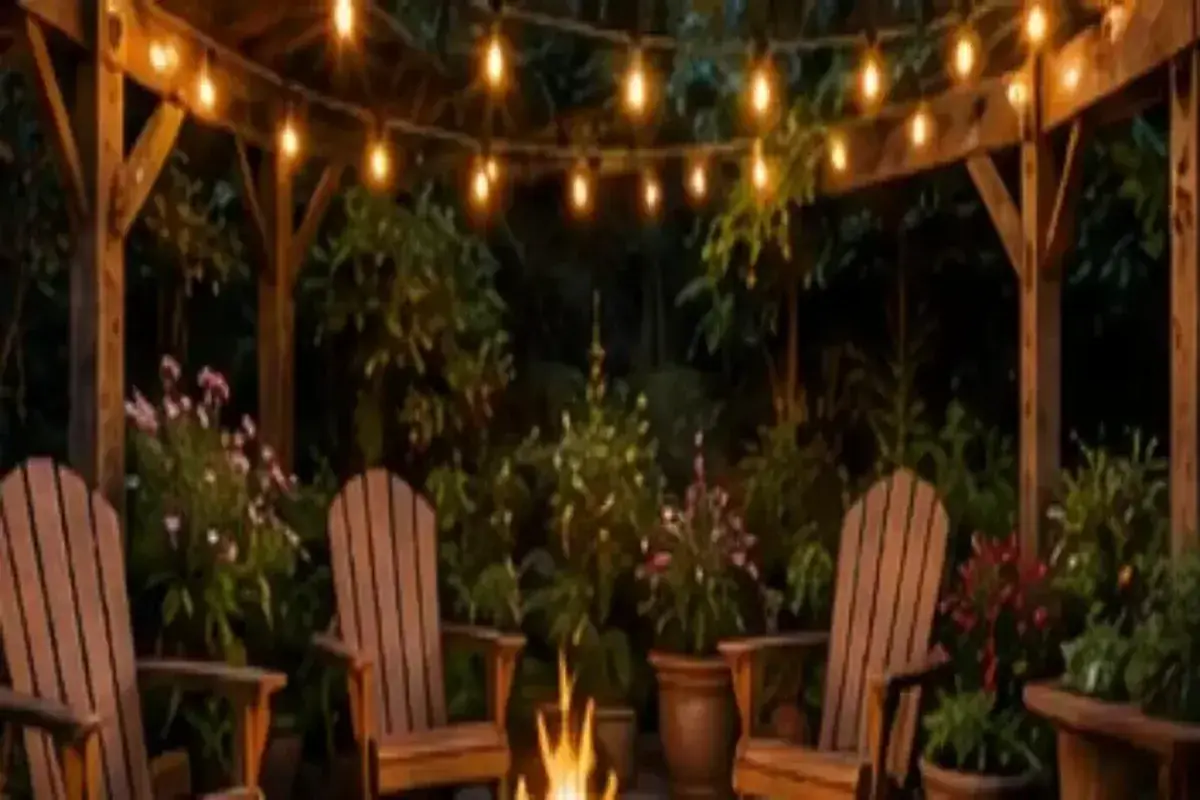
Make a Small Front Porch Feel Larger Without Remodeling is easier to approach when the project starts with the way the space is actually used.

Start by removing visual obstacles
A small porch often feels cramped because the eye encounters too many competing objects before it can read the shape of the space. Before buying anything, remove items that are rarely used, move planters away from the walking line, and look at the porch from the sidewalk and driveway. The goal is to create one clear visual path from the approach to the door. When that path is easy to understand, the same porch can feel more generous without changing its footprint.
Measure the usable floor area after the walking route is protected. A porch that is technically wide enough for a chair may still feel tight if the chair forces people to turn sideways. Mark the door swing, stairs, railings, hose connections, and any service panels on a simple sketch. Treat those fixed elements as boundaries, not spaces to fill.
Use furniture with a lighter footprint
Choose furniture by how much room it leaves around it, not simply by the dimensions of the frame. A narrow bench with an open base can visually disappear more easily than a deep lounge chair with thick arms. One well-scaled seat is often more effective than several small pieces that create a busy edge. If you need two seats, look for pieces that can sit close to the wall without blocking the main route.
Keep the furniture arrangement slightly asymmetrical if the porch is narrow. A pair of identical chairs can look attractive but may create a visual wall across the entrance. A bench on one side and a small table or planter on the other can create balance while keeping the center open. Test the arrangement with cardboard boxes before purchasing anything heavy.
Practical checkpoint
Create a stronger line to the front door
The front door should read as the destination. A simple runner, a restrained pair of planters, or a consistent material color can guide the eye toward it. Avoid placing a collection of objects directly in front of the door, because that makes the entry feel like a storage area rather than a threshold. The most successful small porches usually have one dominant visual cue and a few supporting details.
House numbers, the door light, and the hardware can reinforce that destination. Keep their finishes coordinated rather than matching every item exactly. If the porch already has strong railings or architectural trim, let those features do some of the visual work instead of layering more decoration on top.
Use lighting to expand the evening view
Good porch lighting does not need to be bright. What matters is where the light falls. A wall fixture near the door establishes the entry point, while softer light along steps or a nearby path can make the porch feel connected to the yard. Avoid placing a powerful bulb where it shines directly into the eyes of someone approaching the house.
Layer light at different heights when possible. A warm, shielded fixture at the door, a low path light beyond the steps, and a small accent on a plant can create depth. Keep controls simple so the lights are actually used. Timers or smart schedules can help, but the basic layout should work even if every fixture is not operating.
Keep planting vertical and restrained
Plants can make a small porch feel welcoming, but large containers can consume the floor area quickly. Use one taller plant where it frames the entry and a smaller container where it adds seasonal interest without narrowing the walkway. Choose plants for the actual light and exposure instead of selecting them only for appearance at the garden center.
If the porch is shaded, use foliage texture and shape rather than trying to force flowering plants into poor conditions. If it is hot and exposed, choose containers and plants that can handle the reflected heat from masonry or pavement. Place saucers where needed and plan how containers will be watered without creating a slippery walking surface.
Let the porch connect to the yard
A small porch feels larger when the landscape immediately beyond it continues the same visual language. Repeating a plant, material, or color from the porch in the front bed can make the threshold feel like part of a larger composition. The transition does not need to be elaborate. Even a simple line of planting that echoes the porch width can make the outdoor area feel more deliberate.
Think about views from inside the house, too. A porch that looks attractive from the street but blocks a favorite window view may not improve daily life. Stand inside the entry and look outward before finalizing tall containers, hanging baskets, or screens. Design the porch from both directions.
Common small-porch mistakes
The most common mistake is trying to solve a small-space problem with more small objects. Many accessories can create the impression of clutter even when each individual piece is attractive. Another mistake is buying furniture first and discovering later that the door swing, stairs, or walkway no longer works comfortably. A third is using very bright lighting to compensate for an otherwise weak layout.
A better approach is to solve circulation first, furniture second, and decoration last. Keep one or two surfaces intentionally quiet. If a porch feature does not improve arrival, comfort, safety, or maintenance, question whether it needs to be there. A smaller number of useful choices usually makes the space feel more finished.
A simple finish-line test
Walk toward the house as a guest would. Then open the door while carrying groceries, a package, or a bag. Sit in the main seat and look toward the street. Finally, stand inside and look outward through the entry. These quick tests reveal whether the layout works in real use rather than only in a photograph.
Photograph the porch from the sidewalk and from the doorway after the final arrangement. Keep those images as a baseline for seasonal changes. If the porch becomes crowded again, remove one item before adding another. The goal is not to make a small porch look bigger through tricks; it is to make every inch work harder and read more clearly.
Practical takeaways
Budget the change before you buy
A small porch does not need a large shopping list. Set a practical budget for the elements that improve daily use first: a stable seat, a useful light, a durable container, or a weather-resistant mat. Then leave room for maintenance supplies and replacement plants. This keeps the project from becoming a collection of decorative purchases that compete for the same limited floor area.
When comparing options, include the cost of keeping them in good condition. A container that needs frequent watering, a finish that needs constant touch-up, or furniture that must be moved every time the door opens may be inexpensive at checkout but expensive in attention. Choose the option that gives the porch a better result with the least recurring friction.
A result that fits real life
How to Make a Front Porch Feel Larger Without Remodeling should make the home easier to use, not simply newer.
Frequently asked questions
Keep reading
- Front Porch Railing Design and Maintenance Guide
- How to Use One Focal Plant to Organize a Small Front Yard
- How to Layer Native Trees, Shrubs, and Groundcover in a Small Front Yard
- How to Choose an Area Rug: Size, Placement, and Material Guide
- Creating the Ultimate Backyard Oasis: A Complete Patio and Outdoor Living Guide
- Backyard Privacy Ideas: Fencing, Landscaping, and Screens That Actually Work