
The garage is one of the hardest-working, least-organized spaces in most homes, expected to hold vehicles, tools, seasonal decorations, sports equipment, and whatever doesn't have another obvious home, often all at once. A garage that's merely storage tends to become storage exclusively, with the car parked in the driveway year-round. Getting it back to a usable, organized space is a genuinely doable weekend-to-two-weekend project, and it follows a fairly predictable sequence.

Empty it and sort before buying a single shelf
The instinct to start shopping for storage systems before clearing the space out is understandable but backwards. Adding more storage capacity to a garage full of items that shouldn't be there anymore just organizes the clutter more neatly rather than solving the actual problem. Pull everything out, or at minimum pile it all in the driveway or a corner, and sort into clear categories: keep, donate, sell, and trash. Anything that hasn't been touched in over a year, particularly duplicate tools or long-abandoned projects, is a strong candidate for the donate or trash pile.
Practical checkpoint
Before moving on, make sure Empty it and sort before buying a single shelf is working for the space described in this guide.
Zone the space before you organize within it
Before buying storage solutions, decide roughly where each category of item will live. Zoning by activity and frequency of use, rather than trying to organize everything with the same system, makes the space intuitive to use and easier to keep that way.
- High-frequency zone, near the door you use most: everyday tools, yard equipment used weekly, recycling and trash bins.
- Medium-frequency zone: seasonal sports equipment, car care supplies, less-used power tools.
- Low-frequency zone, on the highest shelves and hardest to reach: holiday decorations, off-season gear, rarely used equipment.
Go vertical before you go wider
Floor space in a garage is almost always at a premium once a car needs to fit, which makes vertical storage the highest-value upgrade in most garage reorganizations. Wall-mounted shelving, slatwall or pegboard panels for tools, and overhead storage racks for genuinely rarely used items like holiday decorations or out-of-season gear all get bulky items up and off the floor without eating into the footprint a parked car needs.
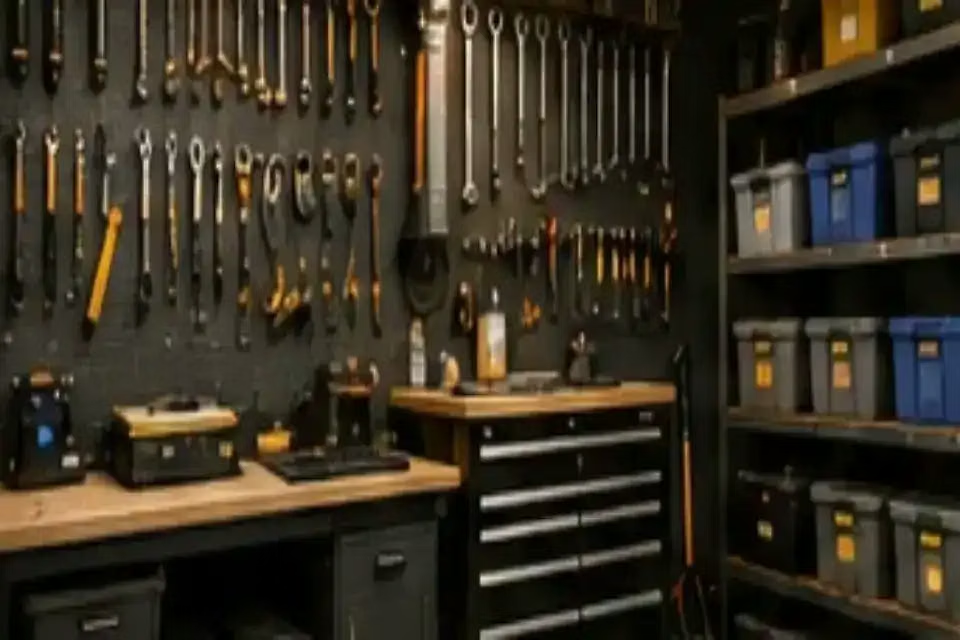
Pegboard specifically earns its popularity: it's inexpensive, endlessly reconfigurable as your tool collection changes, and keeps frequently used hand tools visible and grabbable rather than buried in a drawer or bin.
Match the storage type to what's actually being stored
Not everything belongs on an open shelf. Loose hardware, like screws, nails, and small parts, is far more usable in labeled bins or a small parts organizer than in a junk drawer. Hazardous materials such as paint, chemicals, and pesticides belong in a lockable cabinet, both for child and pet safety and to keep them out of temperature extremes that can degrade or destabilize some products. Bikes and long-handled yard tools do better on wall-mounted hooks or a dedicated rack than leaned against a wall, where they tend to fall and block access to whatever's behind them. A rolling tool chest or a wall-mounted French cleat system works well for a small workbench area, keeping the tools actually in use within arm's reach while everything else stays wall-mounted or shelved out of the way.
The goal isn't one perfect storage system for the whole garage; it's matching the right type of storage to what's actually being stored, since a bin that's great for holiday lights is the wrong choice for a circular saw.
Deal with hoses, cords, and anything that tangles
Garden hoses and extension cords are a disproportionately common source of garage chaos relative to how much actual space they take up, mostly because they're awkward to store neatly without a dedicated solution. A wall-mounted hose reel or a simple bracket keeps a hose coiled and off the floor; a labeled hook or small bin for each extension cord, coiled rather than tangled in a pile, saves real time on the next project that needs one.
Keep a clear path and a real parking spot
It's worth being genuinely disciplined about protecting the actual parking space and a clear walking path to the house door, rather than letting storage creep inward over time. Painting a line on the floor marking where storage should stop, or using floor markings to indicate the car's parking footprint, gives an ongoing visual reminder that keeps the space from slowly refilling with clutter the way garages tend to. Rotating a few bins seasonally, bringing snow gear toward the front in winter and gardening supplies or patio furniture cushions forward in spring, keeps the most relevant items within easy reach without needing to redesign the whole system twice a year.
A quick safety check
Keep a clear zone around the garage door track and opener mechanism, don't block emergency exits or breaker panels with storage, and mount heavier overhead storage only into ceiling joists, not drywall alone, rated for the load you're planning to store.
Maintaining it after the big reorganization
The initial organization project is the hard part; staying organized afterward is mostly about a quick, regular reset rather than a repeat of the full overhaul. A five-minute pass at the end of each season, putting seasonal items back in their zone and doing a quick check for anything that's drifted out of place, keeps the system working without letting six months of small slippage turn into another full weekend project.
Frequently asked questions
What's the single best first upgrade for a cluttered garage?
Wall-mounted shelving or a pegboard system for frequently used tools, since getting items off the floor and up onto walls both frees up parking space and makes the most commonly needed items faster to find, which is usually the biggest daily frustration point.
How do I organize a garage that's also a workshop?
Keep the workshop zone, meaning the workbench, power tools, and project materials, clearly separated from storage and parking zones, ideally along one wall, so active project space doesn't get overtaken by items that are simply being stored rather than used.
Is it worth hiring a professional for garage organization?
For a straightforward garage, most of the changes above are achievable without professional help over a weekend or two. A professional or a custom system becomes more worthwhile for an oddly shaped garage, a full slatwall or cabinet build-out, or simply if the volume of decisions about what to keep feels overwhelming to tackle alone.