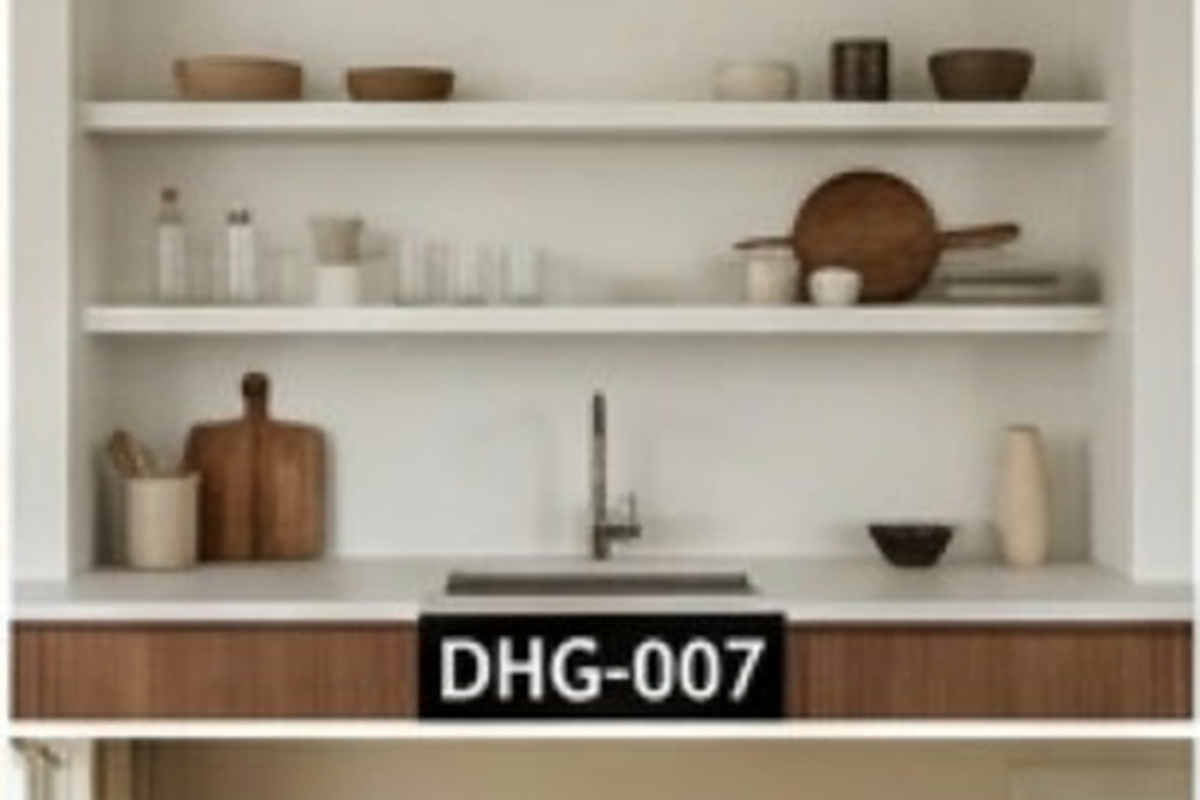
Build useful, calm-looking open shelves by balancing everyday dishes, negative space, color repetition, and a few decorative pieces.
Start with what you actually use
Open shelves work best when they display items that belong in the kitchen. Start with everyday plates, bowls, glasses, mugs, or serving pieces you reach for often. If every shelf becomes a display zone, the system can look beautiful but become inconvenient. Practical objects give the arrangement a reason to exist.
Group similar items rather than spreading one plate, one glass, and one bowl across the entire wall. Stacks create visual mass and make restocking easier. Leave decorative objects for the spaces that remain after the useful pieces are in place.
Create a visual rhythm
Good shelf styling usually has a repeating rhythm: stack, vertical group, open space, accent object. Repeat that rhythm loosely rather than making every shelf identical. The eye should notice a pattern without seeing a rigid formula.
If the shelves are long, vary the density. One section can hold a taller group of cutting boards while another carries stacked bowls. This keeps the wall from looking like a continuous line of identical objects.
Limit the color story
Open shelving exposes many objects at once, so color can accumulate quickly. Choose a small palette based on what you already own. White ceramics with wood, glass, and one accent color are forgiving. If your dishes are colorful, let the decor stay quieter.
You do not need matching dishes. Repeating one or two colors is enough to make a mixed collection feel connected. A green plant, blue bowl, or brass accent can bridge different objects when used sparingly.
Use vertical pieces to vary height
Flat stacks alone can make shelves look low and compressed. Add vertical cutting boards, framed art, a narrow vase, or a tall container where safe and appropriate. Varying height gives the eye a path across the shelf instead of making every object sit on the same visual line.
Keep tall pieces stable and away from edges. In homes with children or pets, avoid placing fragile or heavy objects where they can easily fall. Open shelving is decor, but it is still storage above a working kitchen.
Leave negative space on purpose
Empty shelf space is not wasted space. It gives the useful objects room to breathe and makes cleaning easier. A shelf that is 80 percent full often feels calmer than one that is packed from end to end.
If you cannot leave any empty space because the kitchen needs more storage, consider whether closed cabinets or a pantry would serve the everyday function better. Open shelving is best used selectively.
Add only a few natural accents
Wood, woven baskets, ceramic vessels, and a small amount of greenery can soften the harder surfaces of a kitchen. Use these accents to connect the shelves with the rest of the room, not to create a separate decorative theme.
A small vase of branches or a potted herb can add life, but avoid turning every shelf into a plant display. Heat, grease, and watering needs all matter in real kitchens.
Practical checkpoint: cleanability
Before finalizing the arrangement, imagine cleaning the shelf after a week of cooking. Objects near the range may collect more grease than items across the room. Keep the most frequently cleaned zones simple and easy to remove.
Use the shelf for things that tolerate regular handling. If a decorative piece requires constant dusting or is awkward to move, it may belong elsewhere.
A shelf formula that stays useful
Try two or three stacks of everyday dishes, one or two vertical boards, one natural accent, one meaningful decorative object, and deliberate empty space. Then live with it for a few days before adding anything else.
Open shelving looks most sophisticated when it feels like part of the kitchen rather than a separate photo set. The best styling decision is often the one that leaves one item off the shelf.
Where this approach works best
Open shelves are most useful where the kitchen already has enough closed storage to handle bulky, messy, or rarely used items. They can work beautifully beside a range, sink, or dining area, but each location has different maintenance demands. Shelves near cooking zones need simpler arrangements because grease and steam increase cleaning. Shelves near a breakfast table can carry mugs, bowls, or serving pieces that are handled frequently. The right location is the one where the display layer supports a real task instead of creating another storage problem.
Common styling mistakes to avoid
The most common mistake is treating open shelving as a place to display everything that does not have another home. That quickly creates visual noise and makes the shelves harder to clean. Another mistake is arranging objects only from the front view. Check the shelf from the doorway, the work surface, and the dining area. A composition that looks balanced straight on may feel heavy from the side. Finally, do not let decorative objects crowd the items you actually use. The shelves should remain a working part of the kitchen.
Frequently asked questions
How full should open kitchen shelves be?
There is no required percentage, but leaving meaningful empty space generally makes the shelves easier to read and clean. Start with less than you think you need and add only useful pieces.
Should open shelves match the cabinets?
Not necessarily. They can coordinate through wood tone, metal, or color while remaining visually distinct. Matching everything can make the wall feel too uniform.
What should not go on open kitchen shelves?
Avoid unstable heavy objects, items that are difficult to clean, and decorative pieces that interfere with normal kitchen work. Safety and daily access should come first.