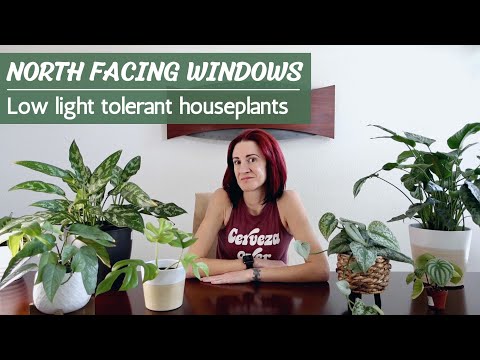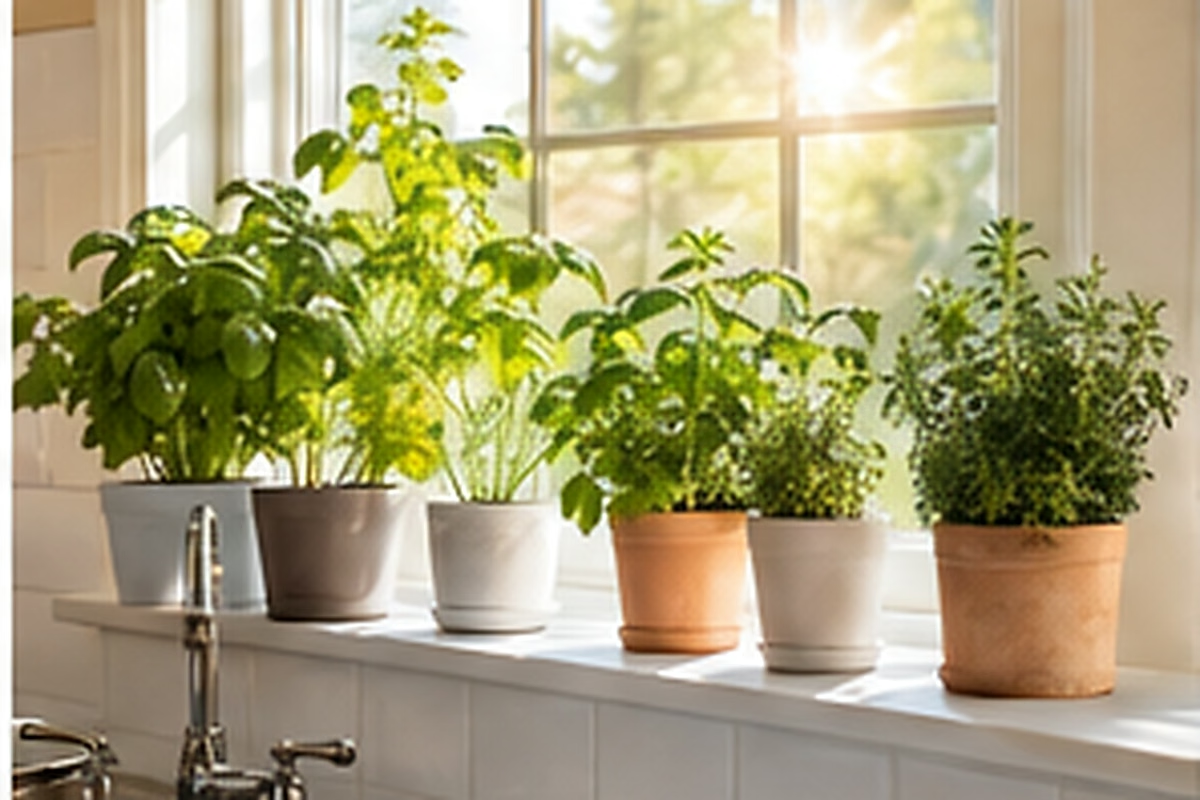
Choose low-light tolerant houseplants for a north-facing window by matching plant needs to the actual light, room, and watering routine.
Treat “north-facing” as a starting point, not a guarantee
A north-facing window usually receives lower-intensity light than a south-facing window, but the actual light in a room depends on the size of the window, nearby buildings, roof overhangs, trees, curtains, and the plant’s distance from the glass. Illinois Extension describes north-facing windows as a low-light starting point and recommends choosing plants that match the available light rather than forcing bright-light plants into dim locations. That is the most useful rule. Before buying a plant, look at the location at several times of day. If the room feels dim to your eyes, the plant is also working with limited usable light. A north window can still be an excellent plant location when the species, placement, and watering routine are chosen together.
Use the site itself as the test. Walk the route, open the door, check the view from the street, and notice how the plant behaves in the actual weather you receive. Home and garden decisions become easier when they are based on what the space does rather than how a single photograph makes it look.
Start with forgiving foliage plants
Low-light tolerant houseplants are usually easier to manage than sun-hungry plants in a north-window room. Pothos, snake plants, Chinese evergreen, and other foliage plants commonly appear in low-light recommendations, but “tolerant” does not mean “needs no light.” Pennsylvania State University Extension emphasizes that light is a limiting factor for houseplants and that plants adjust to lower illumination. Expect slower growth in a dim location. That is not automatically a problem. The goal is steady, healthy foliage rather than forcing rapid growth where the room cannot support it. Choose plants whose natural form still looks good when growth is measured over months rather than weeks.
Keep the decision small enough to reverse. A measured trial, one container, or one planting group can teach you more than a large purchase made before you understand the site. That approach also protects your budget and reduces the temptation to solve uncertainty by adding more.
Place the plant where the window actually helps it
Distance matters. A plant sitting a few feet from a north window can experience a different light level from one directly beside the glass. Furniture, blinds, and curtains can reduce the light even more. Start with a plant near the brightest practical area, then watch its growth pattern. If new leaves become smaller, stems stretch, or the plant gradually leans toward the window, the light may be insufficient. Do not immediately fix a light problem by adding more water. Low light can slow growth and moisture use, which means watering too aggressively may create a second problem. Move the plant gradually and observe it rather than making several changes at once.
Pay attention to transitions: where the new element meets a path, wall, lawn, counter, or existing plant. The edge is often where a good idea succeeds or fails. A clean transition does not need to be formal; it simply needs to make sense for the next thing a person or plant has to do.

Use leaf signals without treating them like a diagnosis
Houseplants can show changes in light through growth pattern, leaf color, leaf size, or stretching. Those signals are useful clues, but they can have more than one cause. Yellow leaves, for example, can relate to watering, root problems, age, or environmental change. Look at the whole plant and its routine. A north-window plant that stays compact and produces healthy new growth is telling you something different from a plant that becomes sparse and elongated. Take a photo every few weeks if you are learning. Comparing the plant to itself is often more informative than comparing it to a perfectly lit social-media photograph.
Write down the one observation that would make you change the plan. This creates a simple decision rule and keeps you from reacting to every small variation. Good home projects have room for adjustment without requiring a full restart.
Build the watering routine around the light level
Watering should respond to the plant, pot, soil, and environment rather than a fixed “once a week” schedule. In lower light, many plants use water more slowly. Check the growing medium before watering and make sure the container drains properly. If a pot stays wet for a long time, look at light, pot size, soil structure, and drainage before simply adding more water. Illinois Extension notes that lower-light conditions can change how plants behave. The practical habit is to inspect the plant, feel the medium, and then water thoroughly when appropriate rather than adding small amounts on a calendar.
Use repetition when you need cohesion and variation when you need function. Repeating a useful material, plant, or container can connect the space, while a different size or position can solve a real constraint. The combination feels edited rather than overly matched.
Know when a grow light is the better answer
A grow light is not a failure. It is a way to change the light available to the plant when the room cannot provide enough. This can be especially useful in rooms where the best-looking furniture arrangement is not directly beside a window. Start by choosing a suitable light for the plant type and following the manufacturer’s placement guidance. Use a timer so the routine is consistent. The goal is not to turn the room into a greenhouse; it is to provide enough supplemental light for healthy growth. A small, well-placed light can be more practical than repeatedly moving a plant around the house.
Do not confuse a quick visual improvement with a complete repair. A new surface, plant, seal, or arrangement can make the problem less visible while the underlying condition remains. Check what the change is actually supposed to fix before you call the project complete.
Make the plant display work with the room
A north-facing window often pairs well with a layered group of foliage rather than a collection of identical pots. Put a taller plant where it does not block the usable window, place medium plants on a stable surface, and keep small plants where they can be inspected. Use repeated pot materials or shapes so the display looks intentional. Avoid crowding leaves against cold glass or a heating vent. The best arrangement is one that lets you clean the window, rotate plants, inspect for pests, and water without moving a dozen objects.
Build maintenance into the design at the same time as the look. Leave access for cleaning, inspection, watering, storage, or seasonal movement. A feature that cannot be reached is not low-maintenance; it is simply postponed maintenance.
Use the seasons to reset expectations
Light changes over the year. A north-facing room may feel much darker in winter, while summer trees can create additional shade outside the window. Reassess plant placement when the season changes. Penn State Extension’s low-light guidance is a reminder that the amount and quality of illumination affect houseplant success. That means a plant that was comfortable in late summer may need a small adjustment by January. Do not make seasonal changes dramatic unless the plant requires them. Move gradually, monitor growth, and make the smallest change that improves the conditions.
Finish by looking at the result from the user’s perspective. Stand where a guest stands, sit where you would sit, or use the route at the time of day that matters. If the improvement still works under ordinary conditions, it is more likely to remain useful after the novelty fades.
Practical checkpoint
Stand in the room at the time you normally notice the plant. Identify the brightest practical area, then place one plant there for several weeks before filling the entire window. This small test lets you learn how your room behaves before buying a collection.
Practical checklist before you finish
- Observe actual light at more than one time of day.
- Choose plants described as tolerant of lower light.
- Keep plants near useful window light without blocking the window.
- Check soil moisture before watering.
- Watch for stretched growth as a clue that light may be too low.
- Consider a grow light when the room cannot provide enough light.
- Reassess placement as seasons and outdoor shade change.
Frequently asked questions
Are north-facing windows good for houseplants?
They can be. North-facing windows often provide lower-intensity light, so the key is selecting plants that tolerate lower light and placing them thoughtfully.
Can pothos grow in a north-facing window?
Pothos can tolerate lower light, but growth may be slower. Place it where the window provides the strongest practical indirect light and observe its response.
Should I water low-light plants less?
Often the plant may use water more slowly in lower light, but do not reduce watering on a fixed rule. Check the growing medium and the plant’s condition.
Further reading
For the practical details behind this guide, see: Penn State Extension: Low Light Houseplants · Illinois Extension: Houseplants and Indoor Lighting
Keep reading
Continue with these related Dream Home & Garden guides: