Plan a productive fall container vegetable garden around light, container size, cool-season crops, frost dates, and the space you actually have.

Plan from your first-frost date backward
A fall container garden is easiest when you start with timing rather than a shopping list. Your first frost date gives you a planning reference, but microclimates and local weather can change the actual season. Cool-season vegetables can perform well as temperatures moderate, while tender plants may need protection as freezing nights arrive. A container is useful because it can be moved. Gardener Scott’s video linked with this article emphasizes the flexibility of containers for fall growing and includes crops such as lettuce, spinach, kale, chard, radish, and other cool-season choices. Use local seed packets and Extension guidance for exact timing in your region.
Pick the sunniest practical container location
Fall light can be tricky on patios and balconies because the sun angle changes and nearby buildings or trees may shade the growing area. Watch the space for a full day before committing your containers. Choose a location that gets useful light and is easy to water. If you place the containers at the far end of the yard, the garden may fail simply because it becomes inconvenient to check. A compact garden close to the kitchen can be more productive in practice than a larger garden you rarely visit.
Choose containers that drain well
Vegetables need a stable root environment, and containers make drainage your responsibility. Use pots with drainage openings and a growing medium suitable for containers rather than heavy garden soil. Larger containers generally buffer moisture and temperature changes better than very small pots, but use the space you have. A few larger containers may be easier to manage than many tiny ones. Place saucers or trays where they will not create standing water against the home or patio surface. The correct setup is part of the crop plan, not a finishing detail.
Choose crops that match the season and the container
The best fall container crops are those that tolerate cool conditions and fit the container size. Leafy greens and quick crops can be practical starting points. Root crops need enough depth, while larger brassicas may need more room than a narrow balcony planter provides. Read the mature size on the seed packet and choose combinations that do not compete excessively. You can also use one crop per container to keep the watering and harvest routine simple. A small garden does not need every vegetable; it needs the vegetables you will actually eat.
Sow and transplant with the final size in mind
Crowding is tempting because young seedlings look tiny. But the final spacing determines whether the leaves receive enough light and airflow and whether you can harvest without stepping through the container. Follow the packet or plant label for spacing. If using transplants, handle roots gently and water them in. In a container, early establishment is especially important because the soil volume is limited. Check the plants often during the first week so you can catch drying, transplant stress, or pests before the crop becomes established.
Water consistently without drowning the roots
Containers can dry faster than in-ground beds, but fall temperatures and lower evaporation can change that quickly. Check the growing medium rather than using a fixed schedule. Water deeply enough to moisten the root zone, then allow excess water to drain. If the top is dry but the lower container remains saturated, the problem is not necessarily “more water.” Check the drainage opening and growing medium. A lightweight container on a sunny deck can have a different routine from a large pot against a shaded wall. Treat each group according to its actual conditions.
Use containers as movable growing rooms
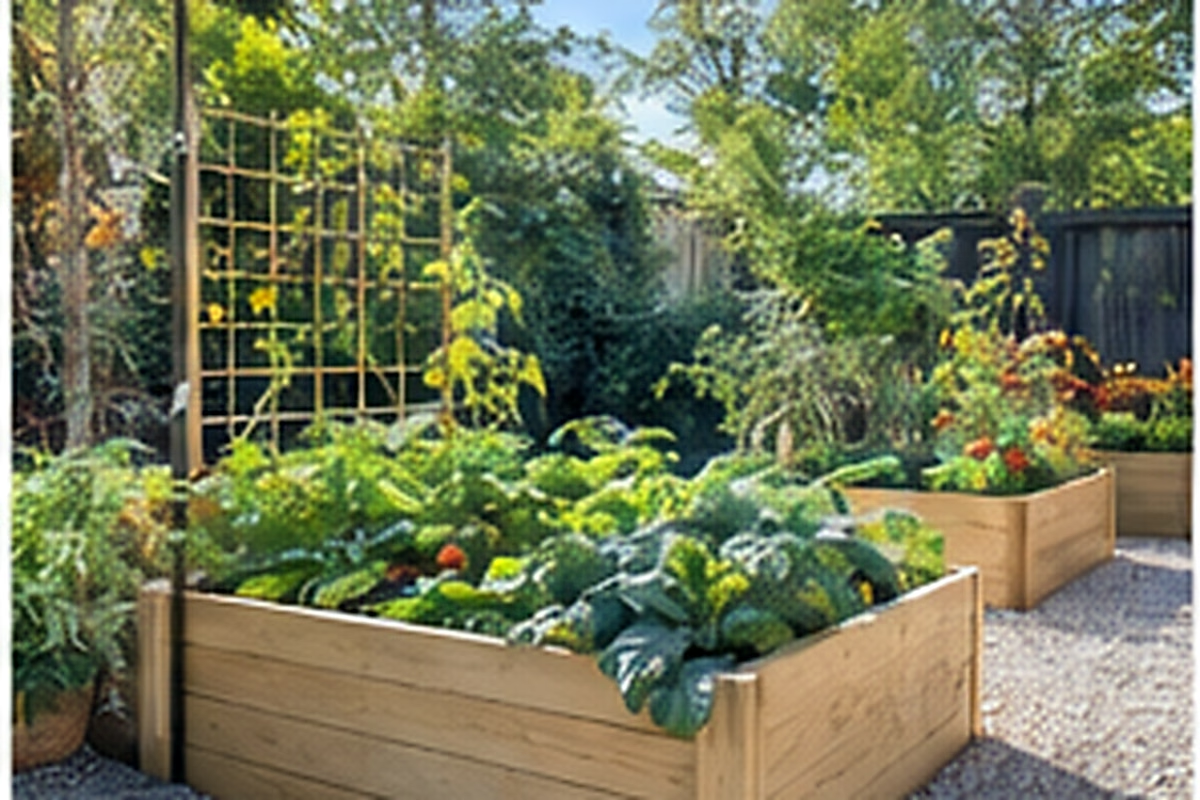
One of the best reasons to garden in containers is control. A container can be moved closer to the house for an unexpected cold night, placed under cover during a storm, or shifted into better sunlight as autumn progresses. Move heavy containers before they are full of water whenever possible. Plan the route before you need it. Keep wheels, stands, or lifting equipment appropriate for the container weight and surface. Do not move large, unstable pots alone if there is a risk of injury or property damage. Mobility is useful only when it remains practical and safe.
Make the tiny harvest feel worthwhile
A small container garden should be judged by how often it gives you something useful, not by how much soil it contains. Plant small batches at intervals when your climate allows so everything does not become ready on the same day. Harvest leaves from crops that tolerate repeated picking according to the variety’s guidance. Remove plants that have finished rather than letting the container become a neglected mass. When freezing weather arrives, decide which containers can be protected and which should be harvested and cleared. Then reuse the growing space for the next season.
Practical checkpoint
Set the empty containers in place before filling them. Walk from your kitchen or door to the plants with a watering can, check the available light, and decide whether you can realistically inspect them every day. Convenience is one of the strongest advantages of container gardening—use it.
Frequently asked questions
What vegetables grow well in fall containers?
Cool-season crops such as lettuce, spinach, kale, chard, radishes, and other regionally suitable vegetables are common choices. Match crops to your climate and container size.
Can I grow fall vegetables on a balcony?
Yes, when the balcony receives enough light, containers drain safely, and the building allows the setup. Choose lightweight, stable containers if weight is a concern.
Should I move containers when frost is expected?
Some containers can be moved to a protected location, depending on crop and conditions. Plan ahead and follow local crop guidance rather than assuming every plant should be moved.
Further reading
For the practical details behind this guide, see: · University of Minnesota Extension: August garden checklist
Treat the tiny harvest feel worthwhile as a practical decision that needs to work during normal use. Confirm dimensions and compatibility, identify the condition that may cause failure, and make one controlled change at a time. Follow the instructions for the chosen materials and keep service or cleaning access available.